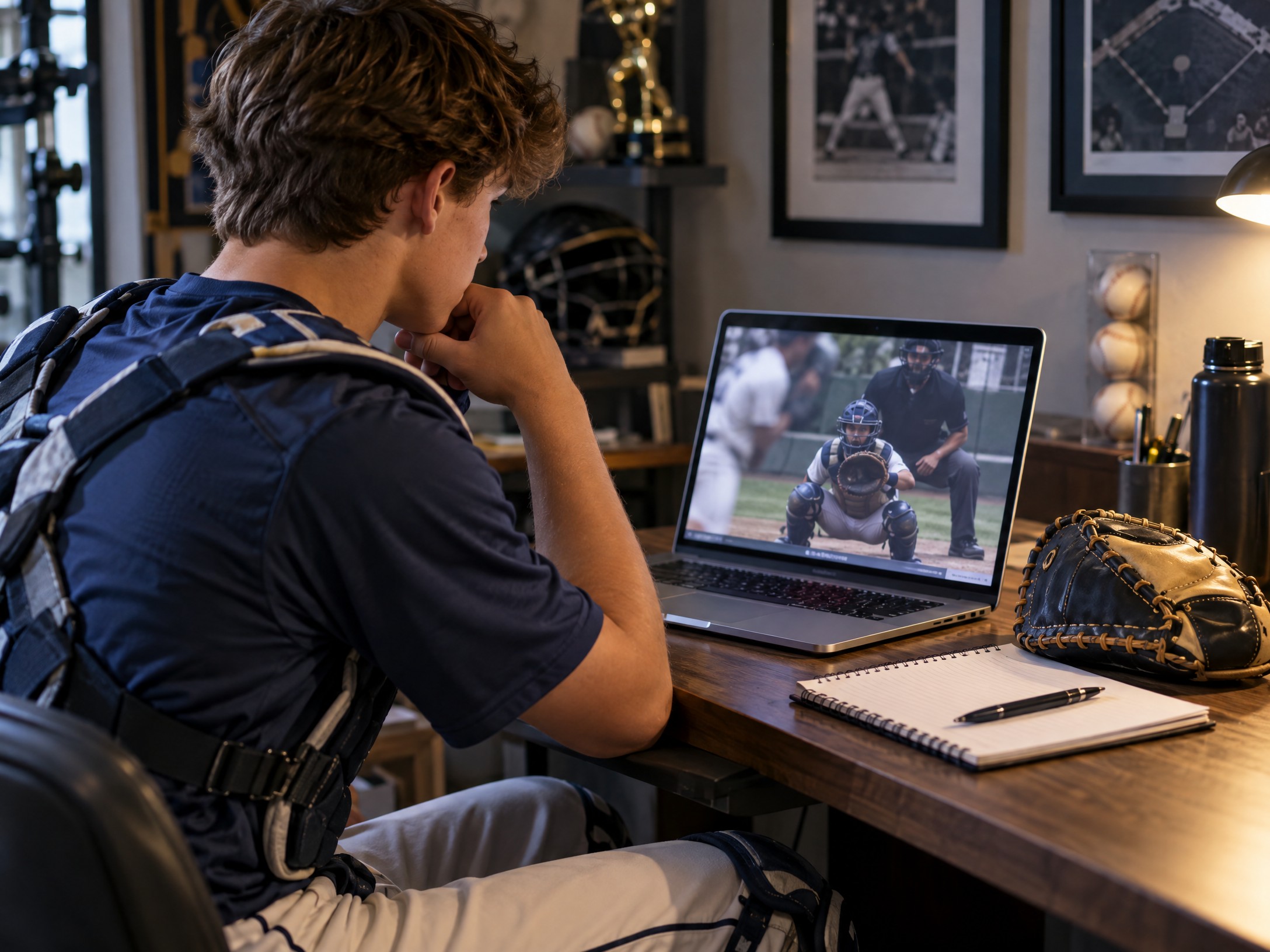
Fall term: catcher development syllabus · Field lab, film room, and purposeful reps.✓ Clear skill focus ✓ Family-friendly path
Syllabus 001
Train like the next level is on the calendar.
Think of development like coursework: establish your starting point, complete the assignment in front of you, then measure what is ready for the next module. It is specific enough for serious players and straightforward enough for families to follow.
01
□
Module: assess
Identify the skill, movement, or game moment that deserves your best attention right now.
02
◎
Assignment: build
Work through a clear focus, a manageable progression, and feedback that makes sense.
03
◇
Checkpoint: compete
Carry steadier movement, stronger decisions, and more confidence into the inning.
Course catalog
Train at the field. Or develop from anywhere.
Both paths keep the focus on the same thing: giving catchers a useful next step that fits real life.
◒Field lab · 101
In-person lessons
Direct on-field instruction for catchers who want more purposeful reps, sharper movement, and feedback that translates to game speed.
◎ Catcher-specific reps→ Movement feedback□ Clear take-home focus
From middle-school foundations to college-level refinement, choose the course of work that matches the level you are chasing.
Assignment: your next practice plan
101
Field Lab
Focused reps and direct guidance for the catcher skill that matters now.
201
Film Room
Share clips, receive clear feedback, then train toward the next level.
301
Independent Study
Structured development work between field sessions, seasons, and recruiting milestones.
Module index
Coursework that holds up in a steadier inning.
Catching is a long list of small jobs. We organize the work into clear modules so players can keep progressing without trying to solve every detail at once.
M01
Receive with intention
Build a quiet, dependable target that helps your pitcher trust the glove.
M02
Block with confidence
Turn the dirt-ball moment into a clear, repeatable movement pattern.
M03
Move the ball faster
Connect feet, exchange, and throw with practical game-ready reps.
M04
Lead the inning
Grow awareness, communication, and the steady presence a team needs behind the plate.
Film · Review · Apply
Film room
Turn your video into your next assignment.
Online coaching turns practice video into a clear development conversation. Submit film, receive a specific cue and drill focus, then return to the next session with purpose.
Send a practice or game clip when you are ready.Receive feedback designed around one helpful next focus.Use drill guidance to keep the next practice moving forward.
Pocket University is built for baseball catchers who want to take the next level seriously. Middle-school, high-school, college-bound, and college players need more than noise—they need intentional work, a repeatable plan, and coaching that connects the skill to the game.
Individual
Start with the player, not a one-size-fits-all script.
Practical
Turn coaching notes into reps a player can use.
Supportive
Help families understand the path without pressure.
Enrollment
Choose your next course of work.
We’ll help identify a purposeful first step—whether that means a field lab, film room coaching, or independent study.
Course guide
The practical questions.
Good choices get easier when you know how the first purposeful step works.
Who is Pocket University for?
Pocket University is designed for baseball catchers in middle school, high school, the college-bound recruiting stage, and college programs who want a more intentional development plan.
How does online coaching work?
A player or parent can share practice or game video. The coaching response focuses on a clear observation, a purposeful next cue, and a way to practice it.
What happens in an in-person lesson?
The session is built around catcher-specific movement and game skills, with direct feedback and a defined practice focus to carry into the next week.
What should we prepare before reaching out?
A quick picture of the player’s current level, longer-term baseball goal, and the most important skill to work on is plenty for the first conversation.

 Assignment: your next practice plan